Keyword & Content Strategy
Build Your SEO Strategy Around What Your Customers Are Actually Searching For
Successful SEO starts with understanding how potential customers search for the products and services your business offers. The right keyword strategy helps identify those searches, understand what people are looking for, and determine which pages and content your website needs to reach them.
I’ll research the searches that matter to your business, identify opportunities based on relevance and search intent, and develop a content strategy designed around the questions, services, and topics your potential customers are actively searching for.
The goal isn’t to create content just to keep publishing something new. It’s to build useful pages and content around real search opportunities that can help the right people discover your business.
What Keyword & Content Strategy Actually Does
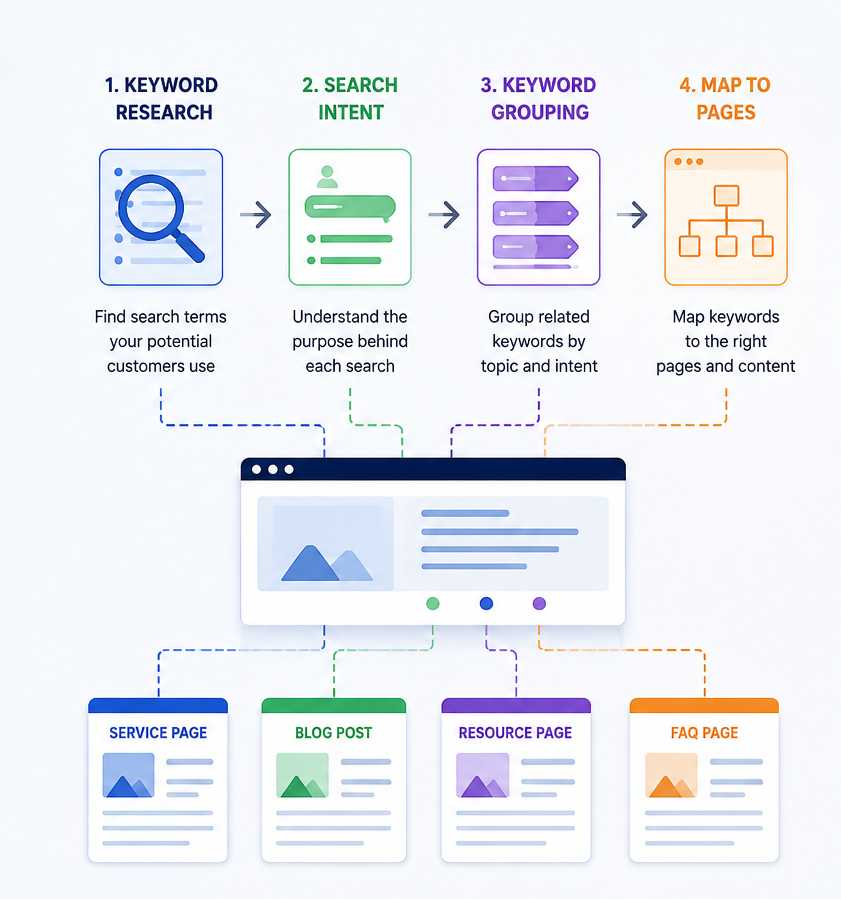
Keyword and content strategy helps determine what your potential customers are searching for, why they’re searching for it, and which pages on your website should meet those needs.
Keyword research is more than finding phrases with search volume. The intent behind a search matters just as much. Someone searching for a specific service may be ready to contact a business, while someone asking a question may still be researching their options. Understanding that difference helps determine what type of page or content makes the most sense for each search.
I’ll use that research to identify opportunities, group related searches around common topics and intent, and determine where those opportunities fit within your website. Sometimes the right answer is improving an existing service page. Other times, it may mean creating a new service page, FAQ, resource, or informational article.
A good content strategy also helps prevent creating multiple pages that unnecessarily compete for the same searches. Each piece of content should have a clear purpose and fit into the larger structure of your website.
The goal is to create the right content for the right searches instead of publishing content simply for the sake of having more of it.
How I Approach Keyword & Content Strategy
Keyword Research
Identify the searches potential customers use when looking for your services, products, and information related to your business.
Search Intent
Understand what someone is actually trying to accomplish with each search so we can match them with content that provides the right information at the right stage of their decision.
Keyword & Topic Grouping
Organize related keywords around common topics and intent instead of treating every keyword as something that needs its own individual page.
Content Opportunities
Identify gaps in your website where new content could provide real value, while also finding opportunities to improve or expand existing pages instead of creating unnecessary content.
Content Planning & Page Mapping
Determine which searches belong with which pages and develop a clear plan for where new or improved content fits within the overall structure of your website.
Keyword Research
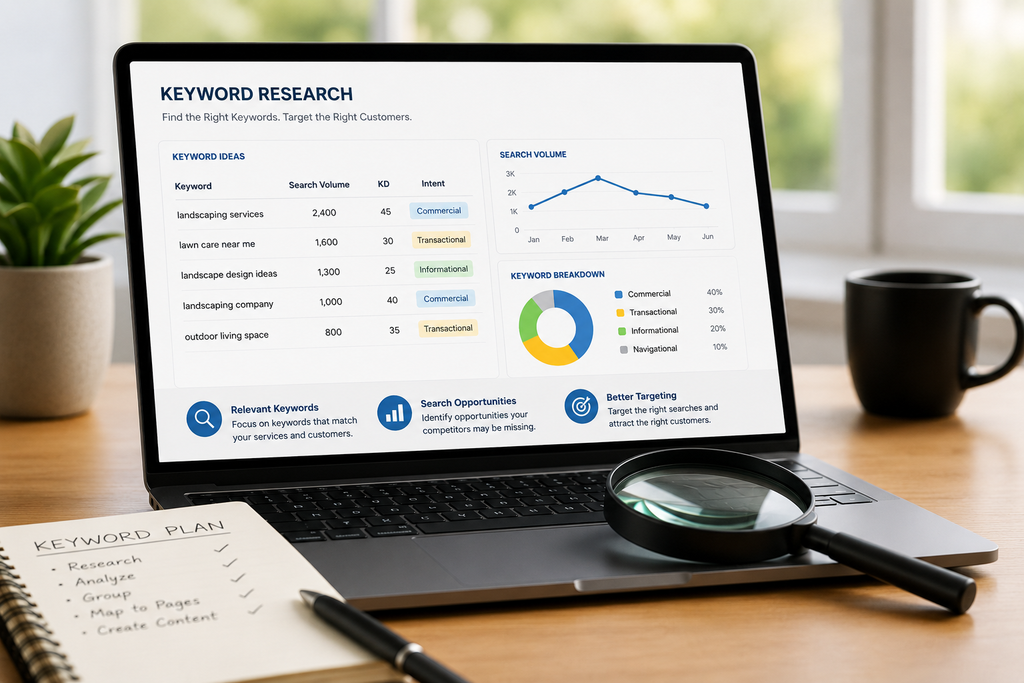
Keyword research starts with understanding how potential customers actually search for the products, services, and information your business provides.
I’ll research the terms and questions people use when searching for businesses like yours, looking beyond search volume alone. A keyword can receive plenty of searches and still be a poor fit for your business if the people using it aren’t looking for what you offer.
The goal is to identify searches that are relevant to your services, your customers, and the areas you want to grow. That may include highly competitive searches as well as more specific opportunities that better reflect what someone is actually looking for.
Those insights become the foundation for deciding which pages should be optimized, where existing content can be improved, and where new content may create additional opportunities.
The goal is to identify the searches that matter to your business—not simply the keywords with the biggest numbers.
Keyword Research
Search Relevance
Search Opportunities
Business Value
Search Intent
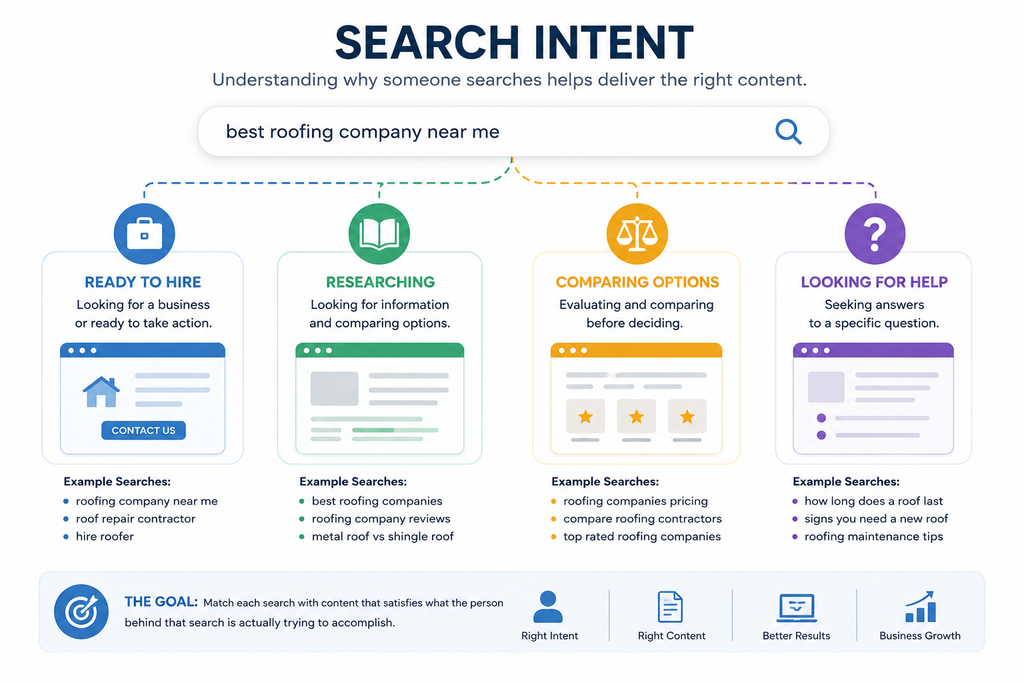
Knowing what someone searches for is only part of the picture. Understanding why they’re searching for it helps determine what kind of content should appear in front of them.
Someone searching for a specific service may be looking for a business to contact, while someone asking a question may still be researching a problem or comparing their options. Those searches shouldn’t necessarily lead to the same type of page.
I’ll evaluate the intent behind important searches and determine whether they are best supported by a service page, informational article, FAQ, resource, or another type of content.
Matching content to search intent helps create pages that make sense for both search engines and potential customers because the page actually provides what the person was looking for.
The goal is to match each search with content that satisfies what the person behind that search is actually trying to accomplish.
Search Intent
Customer Journey
Page Type
Relevant Content
Keyword & Topic Grouping
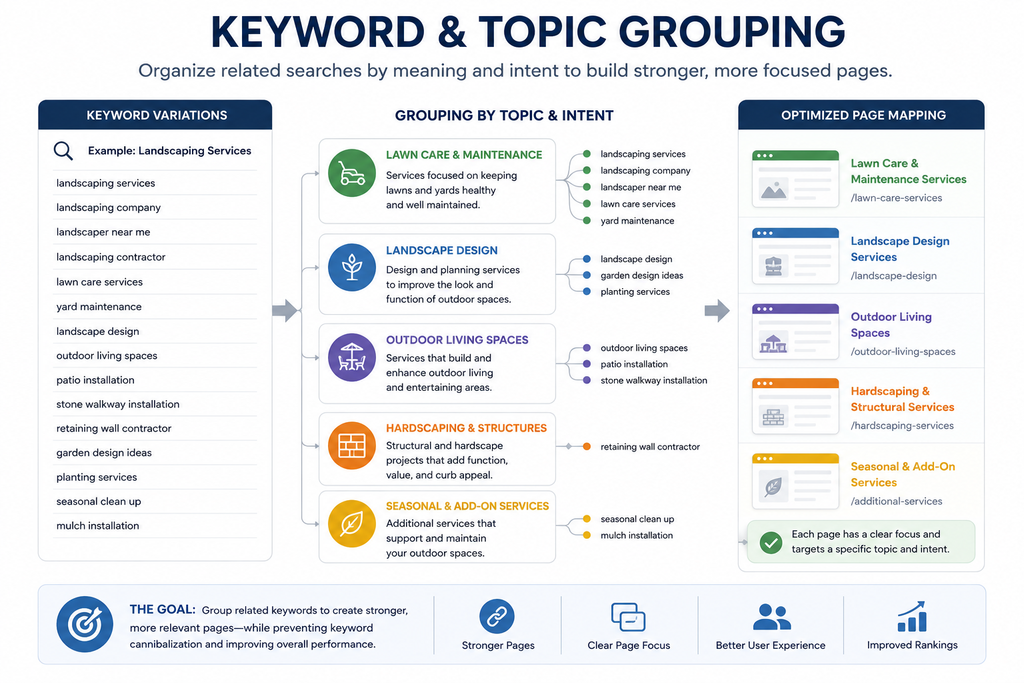
Every variation of a keyword doesn’t need its own page.
People often search for the same service or topic using slightly different words. Instead of creating separate pages for every variation, I’ll group related searches based on their meaning, topic, and intent.
This helps determine which keywords can naturally be targeted together on one strong page and which searches represent a different enough need to justify their own content.
It also helps prevent multiple pages on your website from unnecessarily competing for the same searches. Each important page should have a clear purpose within the overall SEO strategy.
The goal is to build stronger, more useful pages around related searches instead of creating unnecessary pages for every keyword variation.
Related Keywords
Topic Grouping
Search Intent
Page Focus
Content Opportunities
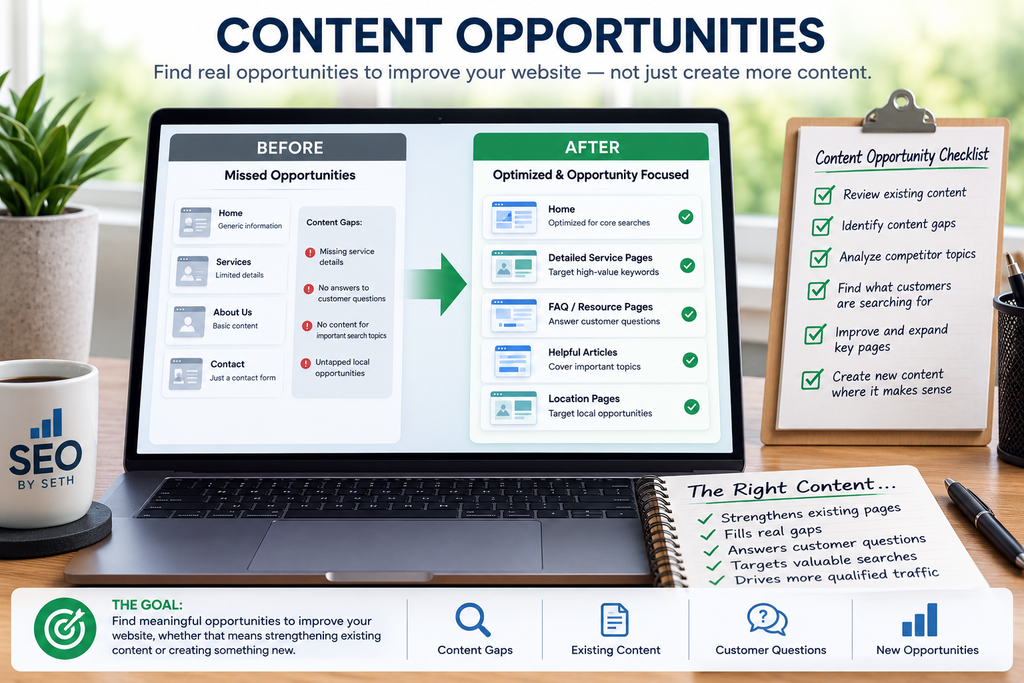
A content strategy shouldn’t automatically mean creating more content.
Before recommending something new, I’ll look at what your website already has. An existing service page may simply need better information, stronger targeting, additional answers to common questions, or clearer organization.
I’ll also look for genuine gaps—services that aren’t represented well, questions potential customers are searching for, useful topics competitors are covering, or search opportunities your website currently doesn’t address.
When a new page, FAQ, resource, or article makes sense, it should exist because it fills a real need within the strategy—not because a package says your website needs a certain number of new pages every month.
The goal is to find meaningful opportunities to improve your website, whether that means strengthening existing content or creating something new.
Content Gaps
Existing Content
Customer Questions
New Opportunities
Content Planning & Page Mapping
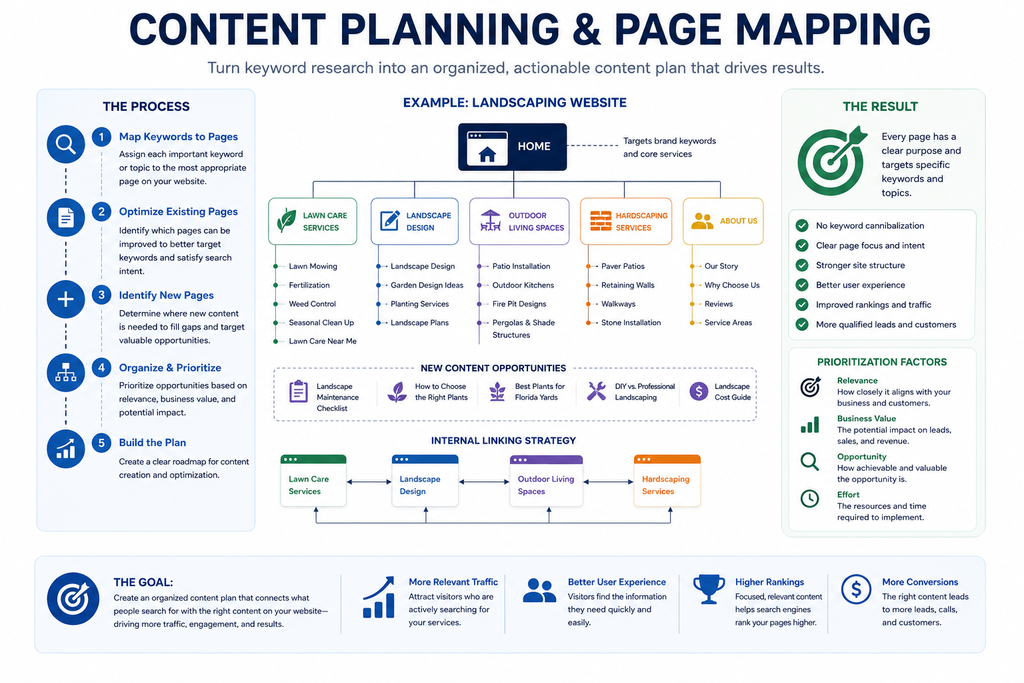
Once the opportunities are identified, they need a clear place within the website.
I’ll map important keywords and topics to the pages that should target them, determining which existing pages can be improved and where new pages may be needed. This creates a clearer relationship between what people are searching for and the content your website provides.
Planning content this way also helps avoid unnecessary overlap between pages. Instead of several pages competing for essentially the same searches, each page can have a defined purpose while supporting related content through internal links.
From there, content opportunities can be prioritized based on relevance, business value, and where improvements are most likely to make a meaningful difference.
The goal is to turn keyword research into an organized, actionable content plan—not just a spreadsheet full of keywords.
Page Mapping
Content Planning
Site Structure
Opportunity Prioritization
Keyword & Content Strategy FAQs
Why Work With SEO by Seth?
When you hire someone to handle your SEO, you should know who is actually doing the work. With SEO by Seth, you work directly with me—from understanding your business and building your strategy to monitoring results and identifying new opportunities.
16+ Years of SEO Experience
I’ve spent more than 16 years working hands-on with SEO campaigns for local businesses across competitive industries and markets.
Work Directly With Me
No account managers or getting passed from person to person. The person you speak with is the same person working on and overseeing your SEO strategy.
Strategy Built Around Your Business
Your business, competition, and market are different. Your SEO strategy should be too. I focus on the opportunities that make sense for your specific goals rather than forcing every client into the same package.
Clear Communication & Real Answers
SEO can get complicated, but communicating it doesn’t have to be. I’ll explain what we’re doing, why we’re doing it, what the results mean, and where I see opportunities to improve.
Free SEO Review
Not sure if your website is targeting the right search opportunities? Let’s take a look.
I’ll review your website’s current keyword targeting, content, and overall page strategy to identify searches you may be missing, pages that could be improved, and opportunities where new content may make sense. No obligation, no sales pressure—just a straightforward look at what your website is currently targeting, where gaps may exist, and where the biggest opportunities may be.